
A steel building shipment is easier to receive when the drawing revision, member marks, packing list and site sequence agree. For a South American project, define the destination and local interfaces early, then carry the same record through factory release, transport and site receipt.
This guide follows the package after the quotation stage. For preparing the initial scope, use the industrial steel building RFQ checklist.
Release one agreed drawing and supply record
Before fabrication or shipment is released, the buyer and supplier should be able to identify the same approved drawing revision and supply list. A late door opening, a changed roof specification or a revised equipment position can affect items beyond the drawing that first changed.
Keep a short issue register: document number, revision, date, purpose and who accepted it. Where a change is pending, identify the affected members or accessories rather than circulating two apparently final sets. The factory, freight coordinator and site team need to know which documents govern their own work.
- Confirm the general arrangement and member identification used for the supply package.
- List items supplied separately, including connection components, trims or accessories.
- Identify the drawings and records the site team will need before unloading.
- Assign a contact to close document questions before the shipment is released.
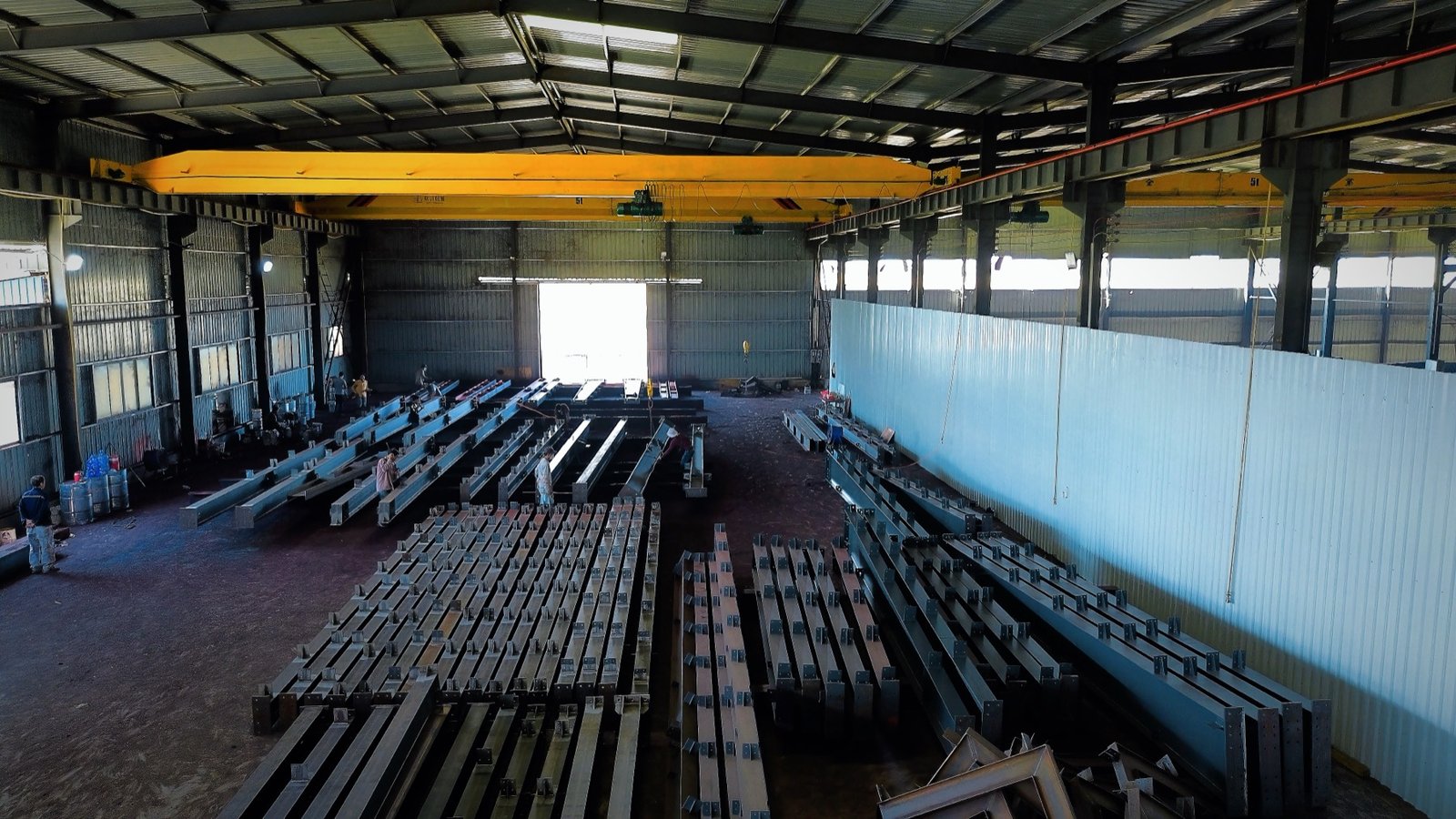
Make the packing list useful on the receiving site
A list of package weights alone does not tell an installation team where a particular member is. Connect package or bundle identifiers to the member marks and quantities used in the project documents. Small components should be identifiable without opening every package on site.
Discuss the intended site sequence before finalising the loading plan. It may be useful to group or identify components by work area, subject to transport and handling constraints. A loading arrangement chosen only to fill a container can leave the first-needed parts difficult to locate at destination.
For each shipment, agree how package identification, quantities and visible condition will be recorded. Useful material can include the packing list, package photographs and a clear record of any separately shipped items. Confirm the required language and format with the receiving team.
Keep descriptions consistent. If a member has one label in the drawings and another in the packing list, resolve the difference before it becomes an on-site search exercise.
Name a responsible party at each handover
South America is not one delivery route. The country, port, inland journey and receiving site determine the practical interfaces. Put those locations in the project brief and ask the chosen freight provider and local project team to confirm their requirements.
The table below is a coordination aid. Assign each responsibility in the actual project agreement; it does not set a standard YINONG shipping or installation package.
Have the parties confirm how changes will be communicated. A revised arrival date should reach the team arranging unloading, not remain in a separate shipping email chain.
Prepare the receiving site before the truck arrives
Ask the local contractor to review the access route and receiving area against the actual shipment and equipment arrangements. The responsible site team should plan safe unloading, storage and installation using the project information and applicable local requirements.
Before dispatch, answer these practical questions:
- Who will receive the arrival notice and confirm site readiness?
- Can the receiving team identify the packages they will receive?
- Where will each group of components be stored and protected?
- Are the current drawings and component lists available to the people receiving the goods?
- Who records missing items, damage or a mismatch, and who responds?

Do not treat a planned arrival date as an installation start instruction. Foundation readiness, the approved installation arrangements and site resources need their own confirmation.
Resolve discrepancies against the shipment record
At receipt, compare the package identifiers and quantities with the agreed documents. Record visible damage and discrepancies with photographs, package marks and the relevant document reference. A message saying “some parts are missing” gives the supplier much less to work with than a marked list identifying the affected package.
Keep the receiving record separate from later changes to the building. If the site layout changes after delivery, open a new technical query rather than quietly treating that change as a shipment shortage. The distinction helps the parties agree the next action.
Use project references to ask better delivery questions
The Mexico industrial plant case is a Mexico reference, geographically in North America. The Riyadh steel project provides a separate Middle East reference. Use the actual location and supply scope of each case when comparing experience.
For a South American inquiry, send YINONG the country and city, industrial use, available drawings, proposed destination and the package you need quoted. Ask for the supply and handover responsibilities to be shown alongside the quotation.
Review industrial steel building solutions · Discuss a steel building project