
Overseas project planning · RFQ scope control
A usable industrial steel building quotation starts with a defined project scope. This checklist helps an overseas buyer describe the design basis, divide responsibilities and compare quotations on the same basis before price becomes the deciding number.
01 · Project brief
Start with the building’s actual use
The building type alone does not define the engineering task. A warehouse, factory workshop, cold storage building, industrial platform or logistics centre can require different layouts, loading conditions, access routes and service systems. State what will happen inside the building and what the structure must support.
RFQ check: attach a simple marked-up plan when possible. A rough layout with dimensions and equipment zones is more useful than a long description with no spatial reference.
02 · Design basis
Provide site, code, geometry and load information
The supplier should not have to guess the project location or design basis. Missing inputs usually return as assumptions in the quotation. Those assumptions may differ between bidders, which makes an apparent price comparison unreliable.
| Input group | Information to provide | Why it changes the scope |
|---|---|---|
| Project location | Country, city or coordinates; site exposure and local conditions | Connects the project to the applicable environment and design requirements |
| Design standard | Required code, authority requirements and approval route | Defines the calculation and documentation basis |
| Building geometry | Length, width, eave height, roof arrangement, bay spacing and clear-height needs | Defines the structural layout and usable space |
| Environmental actions | Design wind, snow, seismic and temperature information where applicable | Affects member design, connections and building envelope decisions |
| Operational loads | Crane data, suspended services, platforms, equipment and storage loads | Identifies loads beyond the basic building structure |
| Ground interface | Foundation responsibility, available soil information and anchor-bolt interface | Clarifies how the steel package connects to the civil works |
If a final value is unavailable, label it as “to be confirmed” and ask each bidder to state the provisional value used. This keeps uncertainty visible instead of hiding it inside a lump-sum price.
03 · Supply scope
Break the package into comparable systems
Ask for an itemised scope or a clear inclusion schedule. The headings below create a practical comparison structure for an industrial project. The final package remains project-specific and should be confirmed in the quotation and contract documents.
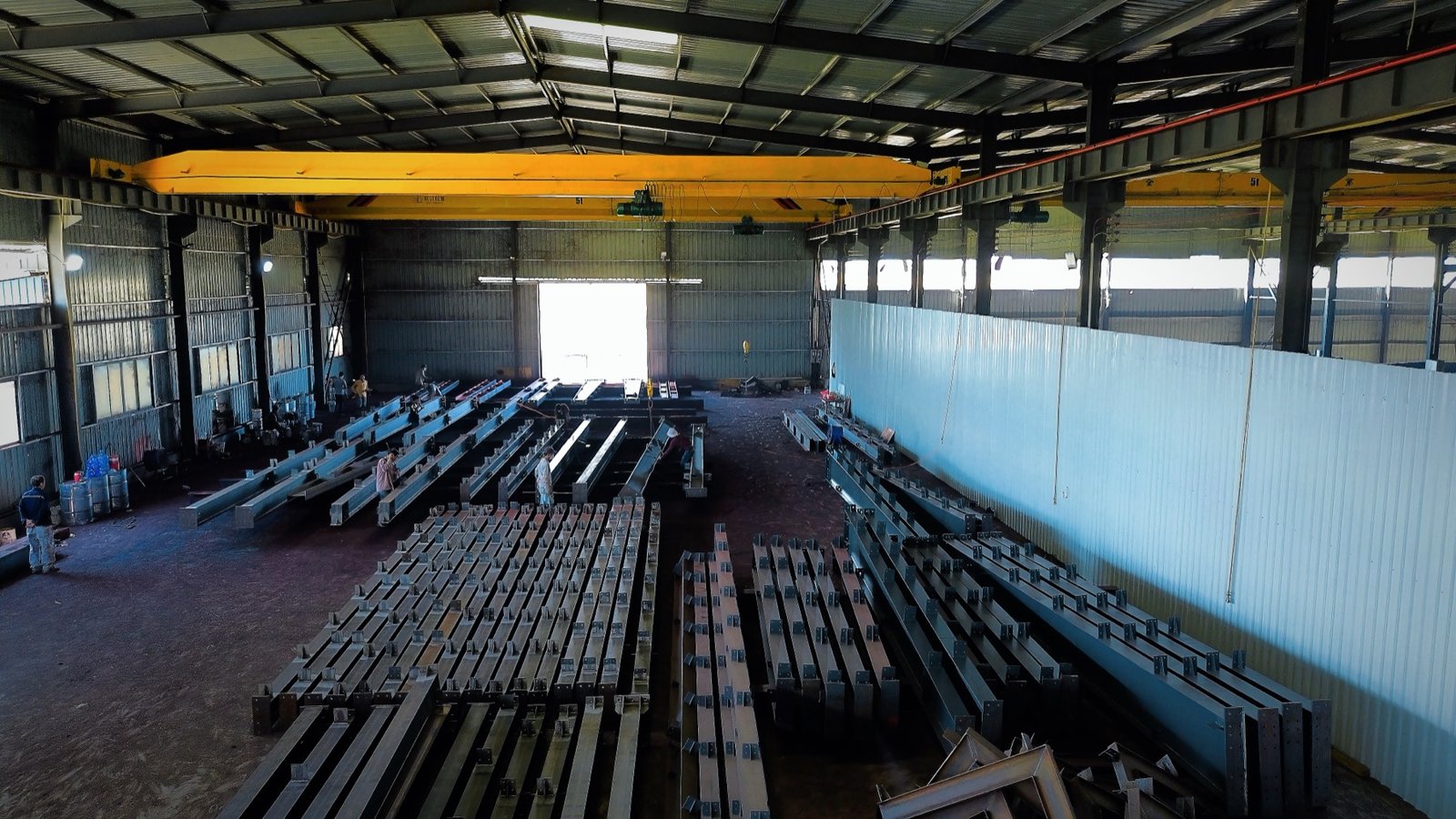
Main steel framePrimary members, secondary framing, connection components and the stated fabrication scope.
Roof and wall systemCladding type, insulation requirement, trims, flashings, gutters, downpipes and defined openings.
Sub-componentsBracing, stairs, handrails, platforms, canopies, doors or other listed items when required.
Surface protectionPreparation standard, coating system, colour and any project-specific corrosion requirement.
Packing and deliveryPacking method, loading responsibility, delivery term, destination and documents.
Installation supportDrawings, method information, remote support or site services only when expressly included.
RFQ check: require every bidder to mark each line as included, excluded, optional or by others. Blank cells should be treated as unresolved.
04 · Responsibility matrix
Identify the interfaces that cause later disputes
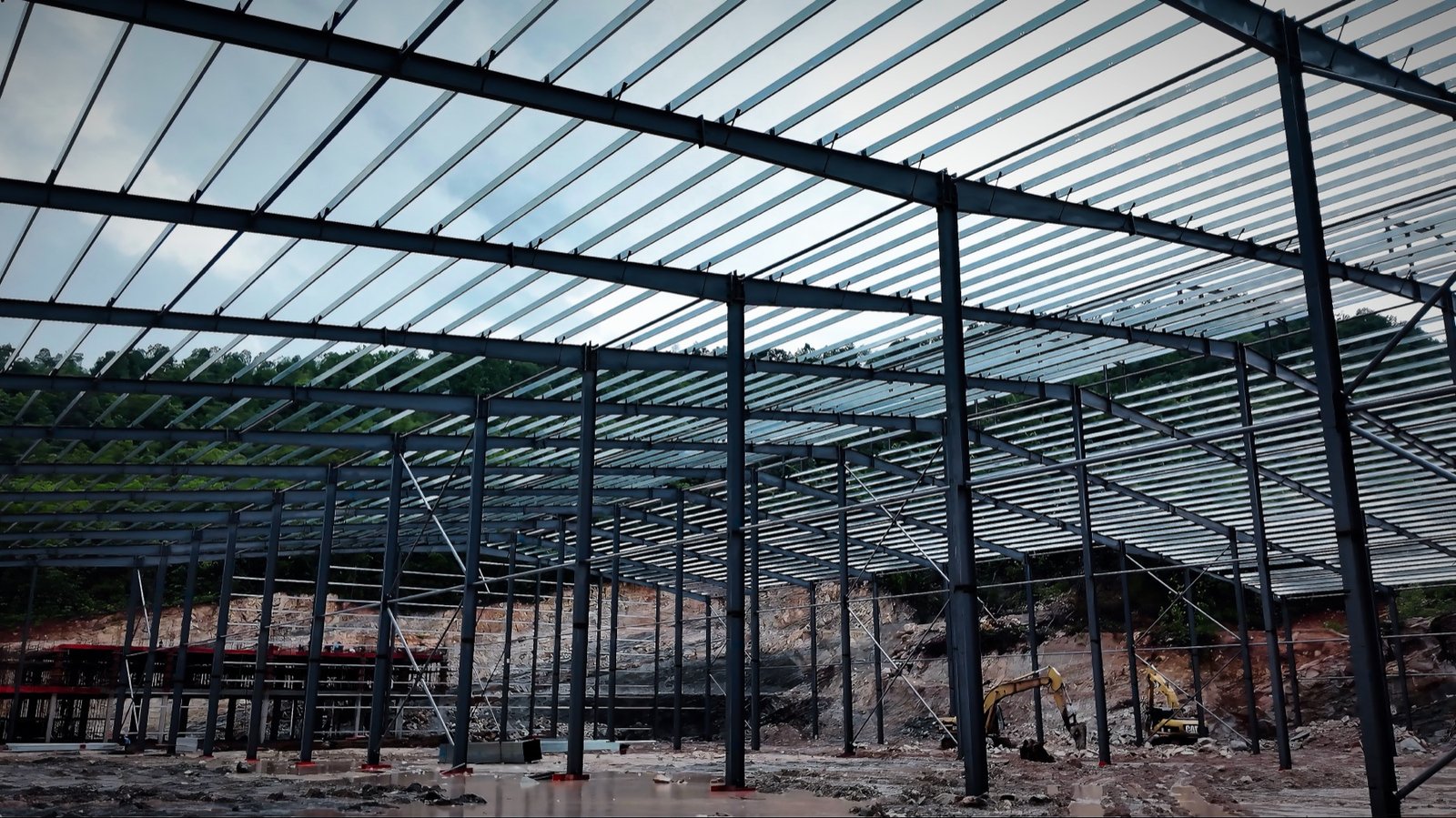
Many industrial building problems occur at the boundary between packages. A short responsibility matrix makes these interfaces visible before purchase. Add project-specific rows for any equipment or local contractor scope.
| Interface | Question to close in the RFQ | Written result required |
|---|---|---|
| Engineering | Who provides structural design, checks input data and responds to local review comments? | Named design scope, code basis and revision process |
| Foundations | Who designs the foundations and supplies anchor-bolt information? | Defined drawings, loads, bolt supply and setting responsibility |
| Openings and services | Who coordinates equipment, ducts, pipes and cable penetrations? | Opening schedule, deadlines and change procedure |
| Unloading and storage | Who unloads, checks, stores and protects the shipment at destination? | Delivery point and site-handling responsibilities |
| Erection | Who supplies labour, lifting equipment, temporary works and site safety management? | Installation boundary and support deliverables |
| Inspection | Which inspections, records or third-party activities are required? | Inspection plan, acceptance documents and cost responsibility |
05 · Document schedule
Ask what will be issued, in which format and when
A document list is part of the deliverable. Confirm the expected language, file format, review stages and number of revision cycles. The required list varies by project, but the RFQ should address the following groups.
- Quotation basisScope schedule, exclusions, assumptions, commercial validity and delivery basis
- Design informationDesign criteria, calculation responsibility and input-data register
- Approval informationGeneral arrangement, member layout, interfaces and review status
- Fabrication informationShop details, material identification and applicable inspection records
- Shipment informationPacking list, loading information and agreed transport documents
- Site informationErection drawings, connection details and included installation guidance
Document names alone are insufficient. “Drawings included” can mean different things to different bidders. Ask each bidder to state the document purpose, issue stage and responsible party.
06 · Quotation comparison
Normalise the scope before comparing price
Place each quotation against the same input and inclusion matrix. Resolve material differences first, then compare the commercial result. A lower total may reflect a narrower scope, a different load basis or work transferred to the buyer.
- Check the design basis. Confirm that location, code, dimensions and loads match the RFQ.
- Reconcile quantities and systems. Note differences in structural scope, envelope and accessories.
- List exclusions and buyer-supplied work. Add the probable local cost when comparing totals.
- Compare surface protection and documentation. Confirm the specified standard and record package.
- Compare delivery terms and schedule definitions. Identify the start point, dependencies and destination responsibility.
- Record every clarification. Make the final written clarification part of the agreed scope.
07 · Copy-ready brief
Industrial steel building RFQ template
Project use: [building operation and internal process]
Location and code: [country/city, required standard, local authority route]
Dimensions: [length × width × eave height, bays, clear height, roof form]
Loads: [wind, snow, seismic, crane, platform, equipment and suspended-service data]
Envelope: [roof/wall system, insulation, openings, drainage and colour]
Supply boundary: [frame, envelope, sub-components, protection, packing, delivery, support]
Documents: [design, approval, fabrication, inspection, shipment and erection requirements]
Commercial information: [destination, delivery term, required schedule and quotation deadline]
Attachments: [layout, site data, equipment information, specifications and responsibility matrix]
Prepare the inputs before requesting a project quotation
Use the checklist to mark confirmed information, open items and the party responsible for each decision.
Editable industrial RFQ brief
Use this blank brief to record building geometry, design inputs, supply scope, exclusions and the evidence required from each bidder. It contains no project-specific engineering values or promised delivery terms.
Download the industrial RFQ brief (TXT)
YINONG project route: industrial steel buildings.
Add the destination and receiving responsibilities
State the country and city, proposed port or delivery point, and the party arranging inland transport and site receipt. If a destination detail is undecided, label it as open in the quotation inputs.
For South American industrial projects, keep the local approval, freight, unloading and installation interfaces visible in the RFQ. After the scope is agreed, use the factory-to-site delivery planning guide to prepare the drawing, packing and receiving records.
Practical questions
Industrial RFQ scope questions
Can an RFQ be issued before all design data is final?
Yes, if unknown items are clearly identified. Ask bidders to state every provisional input and provide a route for revising the quotation when confirmed data becomes available.
Why request an inclusion and exclusion schedule?
It exposes scope differences that a single total price cannot show. It also helps local contractors understand which work remains outside the supply package.
Should foundation design be included in the steel package?
The responsibility depends on the project. The RFQ should define who designs the foundations, who provides reaction data and anchor-bolt information, and who obtains local approval.
How should a buyer handle changes after quotation?
Keep an input register and issue written revisions. Ask the supplier to show the effect on scope, price, documents and schedule before the change is accepted.